A hoodie is one of the simplest pieces of clothing in modern fashion. It is comfortable, practical, easy to wear, and almost universally understood. Yet some hoodies become much more than everyday clothing. They become recognizable symbols of a particular culture, design philosophy, and generation. The CDG Hoodie, particularly styles associated with Comme des Garçons PLAY, is one of those pieces.
At first glance, a CDG Hoodie can look remarkably straightforward: a soft sweatshirt, a hood, ribbed cuffs, and a small graphic or logo. But its appeal comes from the contrast between simplicity and reputation. Behind that understated garment is a fashion house known for challenging conventional ideas about beauty, luxury, construction, and identity.
Comme des Garçons was founded in Tokyo by Rei Kawakubo in 1969. Over the following decades, the label became famous for experimental clothing and a willingness to reject ordinary fashion rules. Its Paris debut in 1981 helped establish Kawakubo as one of the most influential figures in avant-garde fashion.
The CDG Hoodie represents a different side of that universe. It takes the intellectual and artistic heritage of Comme des Garçons and places it into an everyday garment that can be worn with jeans, sneakers, cargos, shorts, or other streetwear staples. That combination of high-fashion heritage and casual practicality is a major reason the hoodie continues to attract attention.
The Beginning: Rei Kawakubo and Comme des Garçons
To understand the CDG Hoodie, it is important to begin with Rei Kawakubo, the designer behind Comme des Garçons.
Kawakubo established Comme des Garçons in Tokyo in 1969. The name itself, commonly translated from French as “like boys,” hinted at an unconventional approach to clothing and gender. The company initially concentrated on womenswear before expanding into menswear and developing numerous lines under the wider Comme des Garçons identity.
During the 1970s, Kawakubo gradually built a reputation for clothing that did not necessarily follow the traditional rules of flattering the human body. Instead of simply making garments that emphasized conventional ideas of elegance, she questioned what clothing could be.
That philosophy became especially visible when Comme des Garçons presented its collections in Paris beginning in 1981. The work was associated with monochrome colors, unusual proportions, asymmetry, deconstruction, and silhouettes that challenged established ideas of luxury fashion.
This history matters because CDG’s modern casual pieces did not appear in isolation. The hoodie may look relaxed and uncomplicated, but the brand behind it was built on experimentation.
From Avant-Garde Fashion to Everyday Clothing
Comme des Garçons eventually developed numerous sub-labels and collections, each with its own personality. This approach allowed the wider company to speak to different audiences without abandoning its central creative identity.
One of the most important developments was the arrival of Comme des Garçons PLAY in 2002. PLAY was markedly more approachable than the highly conceptual runway collections associated with Kawakubo’s mainline work. It focused on familiar wardrobe pieces such as T-shirts, knitwear, cardigans, and hoodies, giving basic garments a distinctive visual identity.
The idea was powerful because it did not require someone to understand avant-garde fashion to appreciate the clothing.
A person could simply see the recognizable heart logo, like the design, and wear it.
That accessibility helped PLAY introduce elements of the Comme des Garçons world to a much broader audience.
The Famous Heart Logo
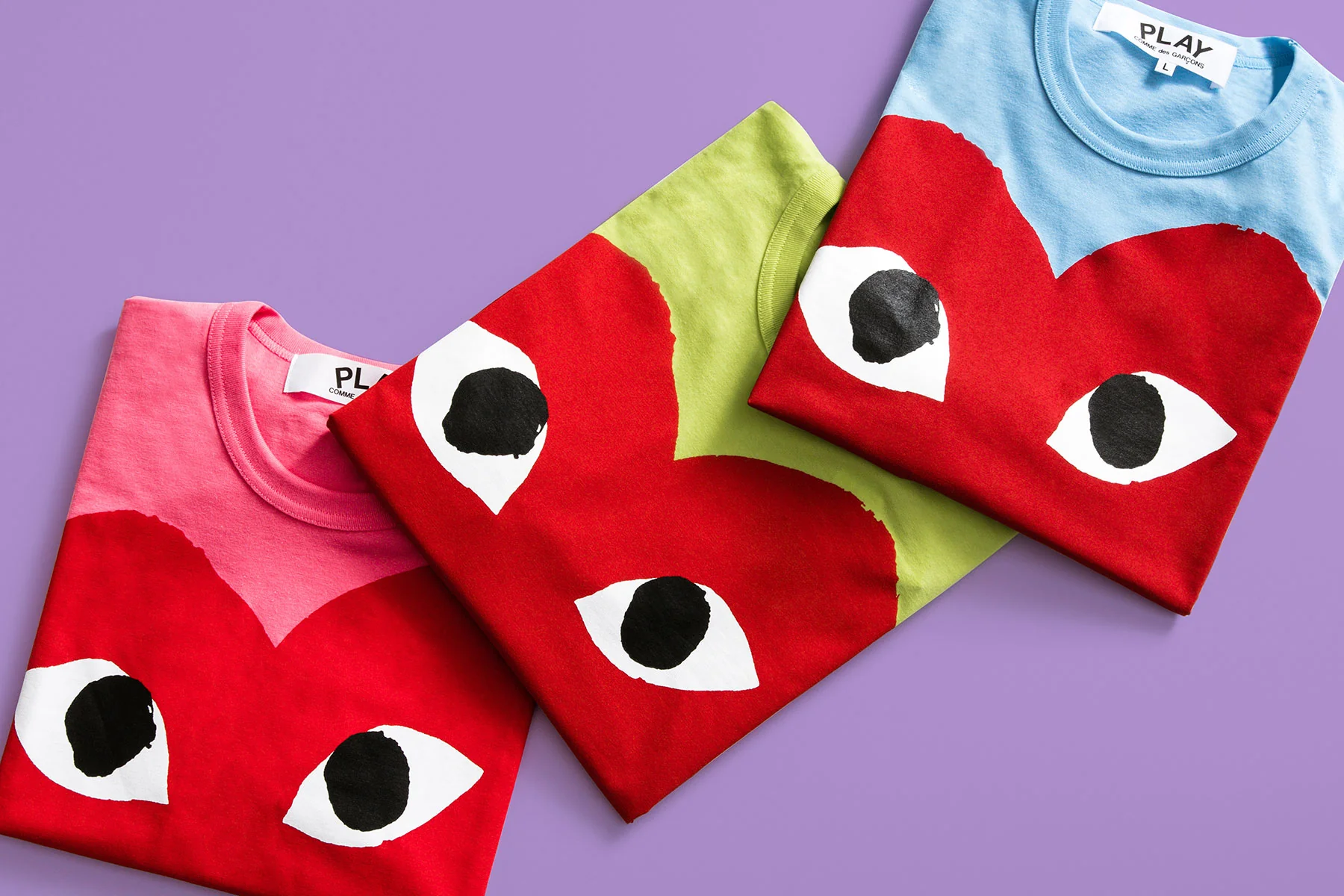
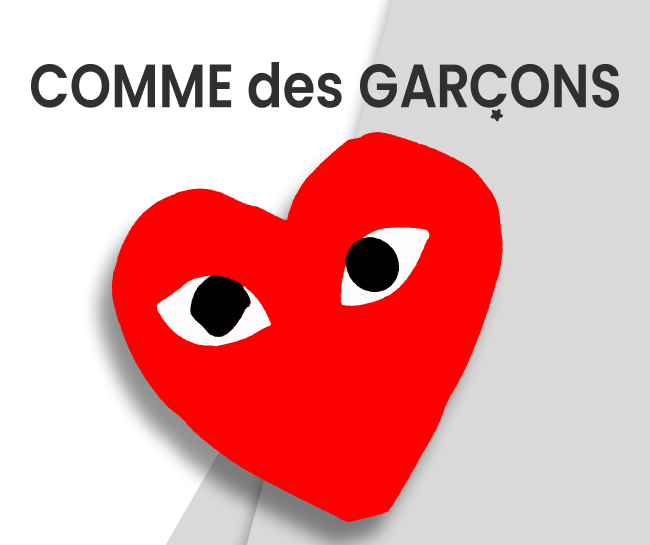
When most people hear “CDG Hoodie,” one of the first images that comes to mind is the famous heart with two eyes.
The logo was created by Polish artist Filip Pagowski. According to Pagowski, the heart drawing emerged spontaneously and was later used for the PLAY project. The original concept was remarkably simple: a hand-drawn heart featuring a pair of expressive eyes.
That simplicity became its greatest strength.
Luxury fashion logos are often built around initials, monograms, elaborate symbols, or carefully controlled typography. The PLAY heart feels different. It looks almost like a character rather than a traditional corporate emblem.
Its slightly imperfect appearance gives it personality.
It does not feel overly formal. It feels curious, playful, and human.
That quality fits the PLAY identity particularly well. The line was introduced as something closer to “a sign, a symbol, a feeling,” and the heart became the visual shorthand for that idea.
Why the CDG Hoodie Became So Recognizable
The success of the CDG Hoodie is not based on complicated construction or excessive decoration.
In fact, the opposite is true.
A typical PLAY hoodie is built around a familiar sweatshirt silhouette. The power comes from the relationship between the basic garment and the unmistakable branding. The hoodie can remain relatively simple while the heart logo immediately communicates its identity.
This is an important lesson in modern fashion: recognition does not always require extravagance.
A small embroidered heart can sometimes have more visual impact than a huge graphic covering an entire garment.
That restraint is part of what makes the CDG Hoodie easy to style. It can function as the main statement of an outfit without overwhelming everything around it.
Design: Simple, Comfortable, and Instantly Identifiable
The traditional hoodie has become a universal item, but the details still matter.
CDG PLAY hoodies are commonly associated with cotton-based sweatshirt fabrics, practical hoods, ribbed cuffs, ribbed hems, and front pockets. Depending on the specific model, construction and fabric composition can vary.
The familiar silhouette creates comfort and versatility, while the logo creates identity.
That combination is important. A fashion item can be visually impressive but difficult to wear. The CDG Hoodie generally takes the opposite approach: it starts with something people already understand and gives it a distinctive fashion language.
This makes it suitable for everyday situations rather than only carefully constructed fashion looks.
The Beauty of Minimal Branding
One reason the CDG Hoodie continues to work stylistically is its approach to branding.
The heart logo is immediately recognizable, but it does not necessarily dominate the garment.
A small heart on a neutral hoodie can be enough.
This creates a sense of understated luxury. Instead of announcing itself through an enormous logo, the piece can communicate its identity through a relatively small visual detail.
Black, grey, white, navy, and other understated colors are particularly easy to combine with existing wardrobes. The result is clothing that can move between casual, minimalist, and streetwear environments without requiring a complete change of personal style.
CDG Hoodie and Streetwear Culture
The growth of the CDG Hoodie also reflects a much larger change in fashion.
The boundaries between luxury fashion and streetwear have become increasingly fluid. Hoodies, sneakers, graphic T-shirts, cargo trousers, and other casual garments have moved from purely practical clothing into the vocabulary of contemporary fashion.
PLAY was particularly well positioned for this transition because it combined a recognizable designer name with familiar everyday garments.
The hoodie therefore occupies an interesting middle ground.
It has the comfort of ordinary streetwear but carries the cultural weight of an internationally recognized Japanese fashion house.
That balance helped CDG PLAY reach people who might never purchase an experimental runway garment.
Collaborations Expanded the CDG Identity
Comme des Garçons has also built a significant reputation through collaborations. These partnerships have allowed different aspects of its design language to interact with other brands and creative communities.
PLAY has been involved in collaborations that brought its distinctive heart motif into other areas of fashion and footwear, including projects connected with Converse and BAPE.
Collaborations are important because they keep a familiar design language from becoming completely static.
A heart logo can appear on different colors, silhouettes, fabrics, and products while remaining recognizable.
For fans and collectors, this creates another layer of interest. The question is no longer simply whether a hoodie has the heart logo. People may also care about the particular season, collaboration, colorway, construction, or graphic treatment.
How to Style a CDG Hoodie
One of the strongest qualities of a CDG Hoodie is its flexibility.
For a clean everyday outfit, a black or grey hoodie can be paired with straight-leg denim and simple sneakers. The result is relaxed without looking careless.
For a stronger streetwear aesthetic, the hoodie works naturally with cargo trousers, wide-leg pants, statement sneakers, and layered outerwear.
A more minimalist outfit can use a neutral CDG Hoodie with black trousers and understated footwear. In this case, the heart becomes the only obvious graphic element.
Layering is another easy option. During colder weather, the hoodie can sit underneath a bomber jacket, denim jacket, leather jacket, or oversized coat. The hood adds texture to the upper part of the outfit while the sweatshirt provides warmth and comfort.
The key is not to overcomplicate it. The CDG Hoodie already has a recognizable identity, so an outfit often works best when the surrounding pieces provide balance.
The Difference Between CDG and CDG PLAY
The term “CDG Hoodie” can sometimes create confusion because Comme des Garçons has multiple lines.
Comme des Garçons PLAY is particularly famous for the heart-with-eyes logo and casual wardrobe staples. PLAY launched in 2002 and became one of the most recognizable parts of the broader Comme des Garçons universe.
Other Comme des Garçons collections can have very different aesthetics.
The main Comme des Garçons collections associated with Rei Kawakubo are historically more experimental and conceptual. They may focus on unusual silhouettes, unconventional construction, exaggerated proportions, or ideas that are far removed from conventional streetwear.
Therefore, not every garment carrying a Comme des Garçons name should be considered the same type of product.
When someone specifically wants the iconic heart hoodie, they are usually referring to the PLAY aesthetic.
Why People Connect With the Heart
The heart logo is more than a decoration.
Its success comes partly from emotional recognition.
A heart is one of the most universally understood symbols in visual culture. It can suggest affection, friendship, youth, energy, or simply positivity. Adding two expressive eyes transforms it from an ordinary heart into a character.
That character-like quality makes the logo feel approachable.
It also gives the hoodie something that many luxury garments lack: a sense of humor.
Comme des Garçons has always had a complicated relationship with conventional fashion rules. The PLAY heart offers a lighter, friendlier interpretation of that broader philosophy.
It says that fashion does not always need to be serious.
Why the Hoodie Has Lasting Appeal
Fashion trends change quickly.
A silhouette can become popular for one season and disappear the next. A particular color may suddenly dominate social media before becoming difficult to find a year later.
The CDG Hoodie has had more staying power because its identity is not completely dependent on a temporary trend.
The hoodie itself is timeless.
The heart logo is distinctive.
The Comme des Garçons name provides heritage.
Together, these three elements create a product that can remain relevant even as surrounding trends evolve.
That longevity is one reason the hoodie has become recognizable far beyond the original audience of Japanese avant-garde fashion.
Quality, Fit, and Choosing the Right Hoodie
When buying a CDG Hoodie, appearance should not be the only consideration.
Fit is especially important.
Some people prefer a relaxed, oversized silhouette, while others want a more structured everyday fit. A hoodie that looks excellent on one person may feel completely different on another depending on shoulder width, body shape, sleeve length, and preferred styling.
Fabric is also worth considering. Sweatshirts can differ significantly in weight, softness, warmth, and interior finish. Different CDG models can use different materials and constructions, so checking the specific garment rather than relying only on the brand name is sensible.
The logo placement should also be considered. A small chest heart creates a subtle look, while larger or multiple graphics produce a much stronger streetwear effect.
Authenticity Matters
Because recognizable designer pieces are frequently copied, authenticity is an important part of buying a CDG Hoodie.
A buyer should pay attention to the seller, product labeling, stitching, fabric quality, logo execution, tags, packaging, and the specific details associated with the particular model.
A suspiciously low price should also encourage caution.
The best approach is to purchase from reputable retailers or trusted sources and compare the garment against reliable product information.
This matters not simply because of resale value, but because authenticity is part of the experience of owning a piece connected to a significant fashion house.
CDG Hoodie as a Cultural Symbol
There is something fascinating about how far the hoodie has traveled.
Comme des Garçons began with an unconventional Japanese designer challenging the established fashion system. Decades later, a casual hoodie bearing a small heart can be found in wardrobes far removed from the original world of experimental runway fashion.
That journey illustrates how fashion ideas evolve.
A design does not have to remain in its original environment to preserve its identity. Sometimes an idea becomes more powerful when it enters everyday life.
The CDG Hoodie is a good example of that process.
It carries traces of Japanese fashion history, European runway culture, graphic art, contemporary streetwear, and global youth culture in one relatively simple garment.
The Enduring Legacy of the CDG Hoodie
The CDG Hoodie is easy to underestimate.
It can look like an ordinary sweatshirt with a small heart on it. But its story is considerably richer.
Behind it is the history of Rei Kawakubo and a fashion house that challenged conventional ideas of clothing. There is the development of PLAY as a more accessible expression of the Comme des Garçons universe. There is Filip Pagowski’s unforgettable heart-with-eyes illustration. And there is the broader transformation of streetwear into one of the defining languages of modern fashion.
The hoodie succeeds because it does not try too hard.
It combines comfort with recognition.
It combines simplicity with history.
It combines casual clothing with high-fashion credibility.
Most importantly, it demonstrates that an iconic fashion piece does not necessarily need a complicated design. Sometimes one strong symbol, placed on one familiar garment, is enough to create an identity that people remember.
Final Thoughts
The CDG Hoodie represents much more than a fashionable sweatshirt. It is part of a larger story about how Comme des Garçons moved between experimentation and accessibility, how PLAY introduced a playful visual language, and how streetwear gradually became intertwined with luxury fashion.
Its appeal lies in the balance.
The hoodie is comfortable enough for everyday life, recognizable enough to make an outfit interesting, and connected to a fashion history much deeper than its simple appearance suggests.
That is why the heart remains so effective.
It does not need to shout.
It simply sits there, watching with its two curious eyes, turning an ordinary hoodie into something immediately identifiable.
And perhaps that is the real achievement of the CDG Hoodie: it proves that great fashion does not always announce itself through complexity. Sometimes, the most memorable designs are the ones that take something familiar, change just one detail, and make that detail impossible to forget.