Corteiz is not simply a fashion label; it is a cultural statement that challenges how modern streetwear is created, marketed, and consumed. In a world where luxury brands often rely on mass visibility and polished advertising campaigns, Corteiz emerged with a completely different philosophy—one built on secrecy, scarcity, and community-driven hype. What makes it stand out is not just the clothing itself, but the atmosphere of exclusivity and identity it creates around every release.
Unlike traditional brands that chase mainstream acceptance, Corteiz built its reputation by resisting it. The brand thrives on controlled access, unpredictable drops, and a loyal audience that feels part of an underground movement rather than a customer base. This approach has turned it into one of the most talked-about names in modern streetwear culture.
The Origins: A Brand Born from Underground Energy
Corteiz was founded in London by Clint419, a creative force who understood early on that streetwear was shifting away from simple graphic tees and logos into something far more symbolic. Instead of competing with established fashion houses on their terms, Corteiz chose to build its own rules.
From the beginning, the brand rejected conventional retail structures. There were no traditional store placements, no predictable seasonal collections, and no wide-scale marketing campaigns. Instead, the early identity of Corteiz was built through cryptic social media posts, password-protected drops, and word-of-mouth marketing that spread like wildfire across online communities.
This underground strategy created curiosity. People were not just buying clothing—they were chasing access. That sense of “being in the know” became one of the strongest pillars of the brand’s identity.
The Philosophy of Scarcity: Why Less Became More
One of the most defining characteristics of Corteiz is its strict control over supply. While most fashion brands aim to scale and meet demand, Corteiz does the opposite. It deliberately limits availability, making each drop feel like an event rather than a product launch.
This scarcity is not accidental; it is strategic. It builds emotional value into every item. A hoodie or cargo from Corteiz is not just fabric stitched together—it becomes proof of participation in a cultural moment. People don’t just wear it for style; they wear it to signal belonging.
The brand’s approach also disrupts traditional consumer expectations. In a world where fast fashion has made clothing disposable, Corteiz brings back anticipation. Waiting for a drop becomes part of the experience, and missing it creates the kind of demand that money alone cannot solve.
Marketing Without Marketing: The Power of Organic Hype
Corteiz has mastered something most brands struggle with: marketing without traditional advertising. Instead of billboards or influencer contracts, it relies on organic hype generated through community engagement and unpredictability.
Social media plays a crucial role, but not in the conventional sense. Posts are often cryptic, locations for pop-ups are revealed last-minute, and access to online drops is frequently locked behind codes or challenges. This transforms the audience into active participants rather than passive consumers.
Perhaps the most powerful aspect of Corteiz’s marketing is its refusal to explain itself. There is no over-explanation of designs or brand values. Instead, mystery becomes the message. That mystery fuels speculation, and speculation fuels demand.
The Aesthetic: Utility, Street Identity, and Rebellion
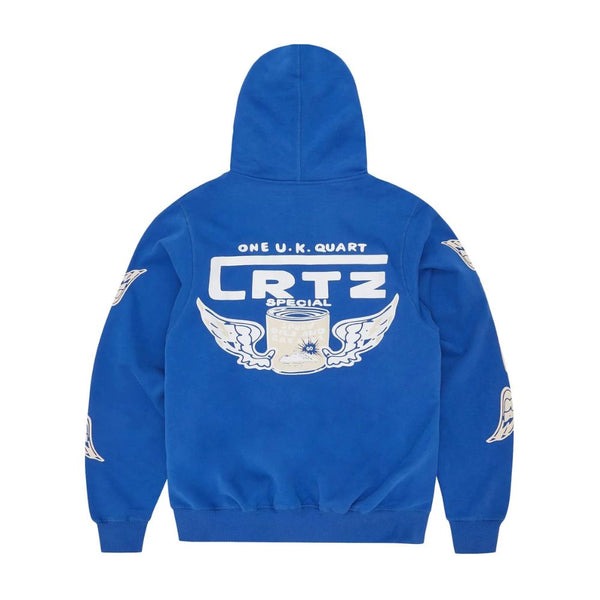
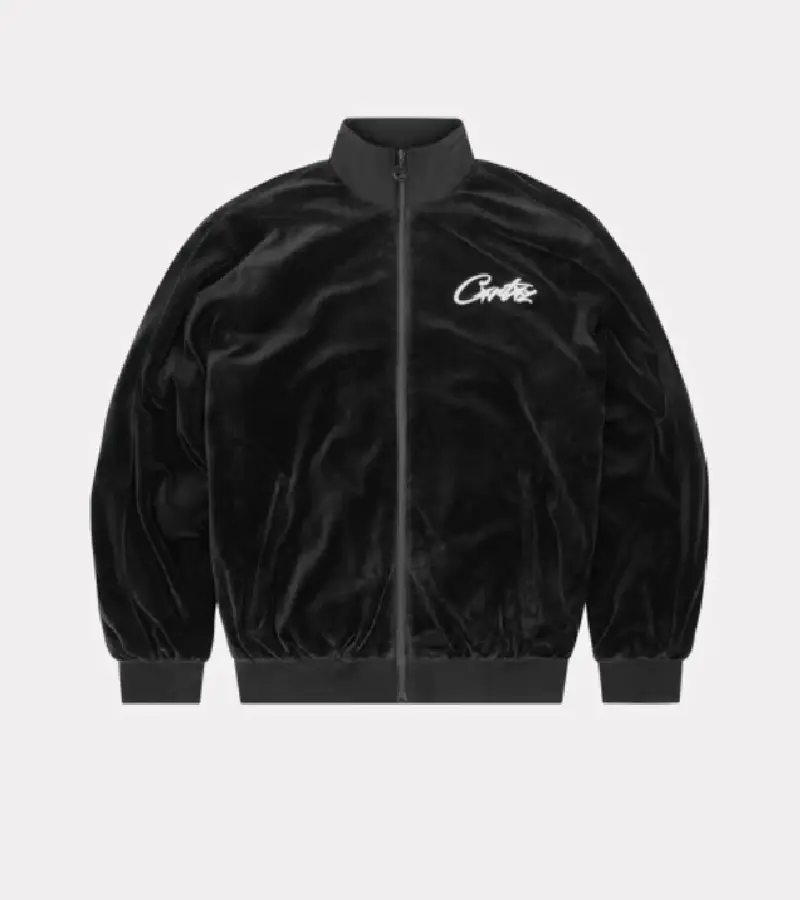
Visually, Corteiz clothing reflects a strong utilitarian influence. Cargo pants, tactical vests, heavy hoodies, and bold graphic prints form the backbone of its collections. The designs are not overly polished or minimal in the traditional luxury sense—they are raw, functional, and expressive.
The iconic Alcatraz logo represents confinement and resistance, a symbol that aligns with the brand’s rebellious tone. It suggests breaking out of systems, whether those systems are fashion norms, social expectations, or economic structures.
Color palettes often remain grounded—earth tones, blacks, greys, and military-inspired shades dominate. This reinforces the idea that Corteiz is not about flashy attention but about subtle recognition among those who understand it.
Community Over Consumers: The Corteiz Identity
One of the most powerful aspects of Corteiz is its emphasis on community. The brand does not treat its audience as customers; it treats them as participants in a shared cultural identity.
This community-driven approach is visible in how drops are organized. Physical events often feel like gatherings rather than transactions. People line up not just to buy clothes but to be part of the experience. Online, the community engages in decoding clues, sharing drop information, and celebrating wins when someone successfully secures a piece.
This sense of belonging is rare in modern fashion. It transforms the brand from a commercial entity into a cultural movement.
The Role of Exclusivity in Modern Streetwear
Exclusivity is not new in fashion, but Corteiz has redefined how it operates in the digital age. Traditionally, exclusivity was tied to high price points or luxury branding. Corteiz, however, uses accessibility restriction instead of just pricing.
Even individuals willing to pay more cannot always secure items, because availability is limited and often unpredictable. This creates a paradox: money alone is not enough. Timing, awareness, and participation matter just as much.
This approach resonates deeply with younger audiences who value authenticity and cultural participation over traditional status symbols. Owning Corteiz becomes less about wealth and more about being part of a moment that cannot be easily replicated.
Cultural Impact: From London Streets to Global Recognition
Although rooted in London street culture, Corteiz has expanded its influence globally. Its drops have attracted attention far beyond the UK, spreading across Europe, North America, and parts of Asia.
Celebrities, athletes, and musicians have been seen wearing the brand, but interestingly, this has not diluted its underground appeal. Instead, it has amplified it. Because the brand did not initially rely on celebrity endorsement, any public figure wearing Corteiz feels like organic validation rather than paid promotion.
The brand’s rise also reflects a larger shift in fashion culture: the power of grassroots movements over corporate marketing machines. Corteiz proves that cultural relevance can be built from the ground up without traditional industry approval.
The Drop Culture Phenomenon
Drop culture is not unique to Corteiz, but the brand has arguably perfected it. Each release feels like a coordinated cultural event rather than a retail transaction.
Sometimes drops happen online with password access. Other times, physical pop-ups are announced at the last minute, drawing crowds who must act quickly or risk missing out. This unpredictability generates urgency and excitement.
The experience often mirrors gaming mechanics—users feel like they are unlocking access rather than simply shopping. That emotional engagement is what keeps the audience invested beyond the clothing itself.
Challenges and Criticism
Despite its success, Corteiz is not without criticism. Some argue that its extreme scarcity model creates unnecessary frustration among fans. Others believe that the hype can overshadow the actual clothing quality.
There is also the question of sustainability in exclusivity-based branding. As demand continues to grow, maintaining the underground identity becomes increasingly difficult. Many streetwear brands that started similarly have eventually shifted toward mainstream production, risking dilution of their original appeal.
However, Corteiz has so far managed to maintain its core identity by resisting over-expansion and staying closely tied to its original community.
The Future of Corteiz: Evolution or Preservation?
The biggest question surrounding Corteiz is what comes next. Will it continue operating as a tightly controlled underground brand, or will it eventually expand into a global fashion powerhouse?
Its current trajectory suggests a careful balance. Instead of chasing mass production, it continues to prioritize cultural relevance and controlled access. This may be the key to its longevity.
If it evolves without losing its core identity, Corteiz could become one of the defining streetwear brands of its generation—not because it followed industry rules, but because it rewrote them entirely.