How to Plan Marrakech Day Trips: The Ultimate Desert and Mountain Guide
Marrakech is a city of sensory overload in the best possible way. The scent of roasted cumin, the bright piles of saffron, the calls to prayer echoing over the bustling Jemaa el-Fnaa square, and the intricate tilework of centuries-old palaces create an unforgettable atmosphere. However, the true magic of Morocco often lies just beyond the ancient clay walls of the medina. Taking time to explore the diverse landscapes surrounding the city allows you to experience the country at a completely different pace. From the snow-capped peaks of the High Atlas Mountains to the arid expanses of nearby deserts, day excursions offer a breath of fresh air and a deep dive into traditional Amazigh culture.
Planning these short escapes requires a bit of strategy to maximize your time and ensure a seamless journey. The regions surrounding the Red City vary dramatically in terrain, climate, and travel time. Whether you are looking for a rugged hiking adventure, a relaxing afternoon by a coastal harbor, or a camel trek across rocky dunes, knowing what to expect is essential. Selecting the right destinations depends heavily on your travel style, your tolerance for winding mountain roads, and how much time you want to spend in transit. By choosing your routes carefully, you can easily transition from the high-energy souks to tranquil valleys and dramatic gorges within a single morning.
Exploring the Majestic High Atlas Mountains and Ourika Valley
The High Atlas Mountains form a dramatic backdrop to Marrakech, their jagged peaks often covered in snow during the winter months. For travelers seeking a quick escape into nature, the Ourika Valley stands out as the most accessible mountain destination. Located just about an hour’s drive south of the city, this lush green valley runs deep into the Atlas range, offering a stark contrast to the arid plains of the Haouz. The valley is famous for its vibrant riverside restaurants, where local cooks place plastic tables and chairs directly into the shallow, cool waters of the Ourika River, allowing visitors to dine on slow-cooked tagines while dipping their feet in the refreshing current.
Further up the valley lies the small village of Setti Fatma, which serves as the launching point for a popular trek to a series of seven waterfalls. This hike requires a reasonable level of agility, as the path involves scrambling over large boulders and navigating steep clay tracks. Local guides are always available at the trailhead to assist visitors, providing crucial stability over the slickest sections of the path. Along the way, small wooden shacks sell chilled sodas and fresh orange juice cooled by the mountain water, offering welcome rest stops before you reach the cascading falls.Marrakech Day Trips For a more rugged and less commercialized mountain experience, heading toward the village of Imlil is highly recommended. Imlil is widely known as the trekking capital of Morocco, serving as the base camp for climbers attempting to summit Mount Toubkal, the highest peak in North Africa. Even if you have no intention of climbing to the summit, the day hikes around Imlil offer breathtaking vistas of terraced walnut groves, isolated mud-brick villages clinging to the hillsides, and dramatic alpine passes. The air here is crisp and clean, providing a massive relief from the summer heat of the plains below.
Discovering the Rocky Dunes of the Agafay Desert
Many travelers arrive in Morocco dreaming of the rolling orange sand dunes of the Sahara, but reaching places like Erg Chebbi or Erg Chigaga requires a minimum of three days due to the massive driving distances involved. If your itinerary only allows for a single day trip, the Agafay Desert provides an exceptional alternative. Located a mere forty minutes southwest of Marrakech, Agafay is a stone desert rather than a sand desert. Its landscape is made up of pale, barren hills that resemble a lunar environment, stretching out toward the horizon with the High Atlas Mountains framing the background.
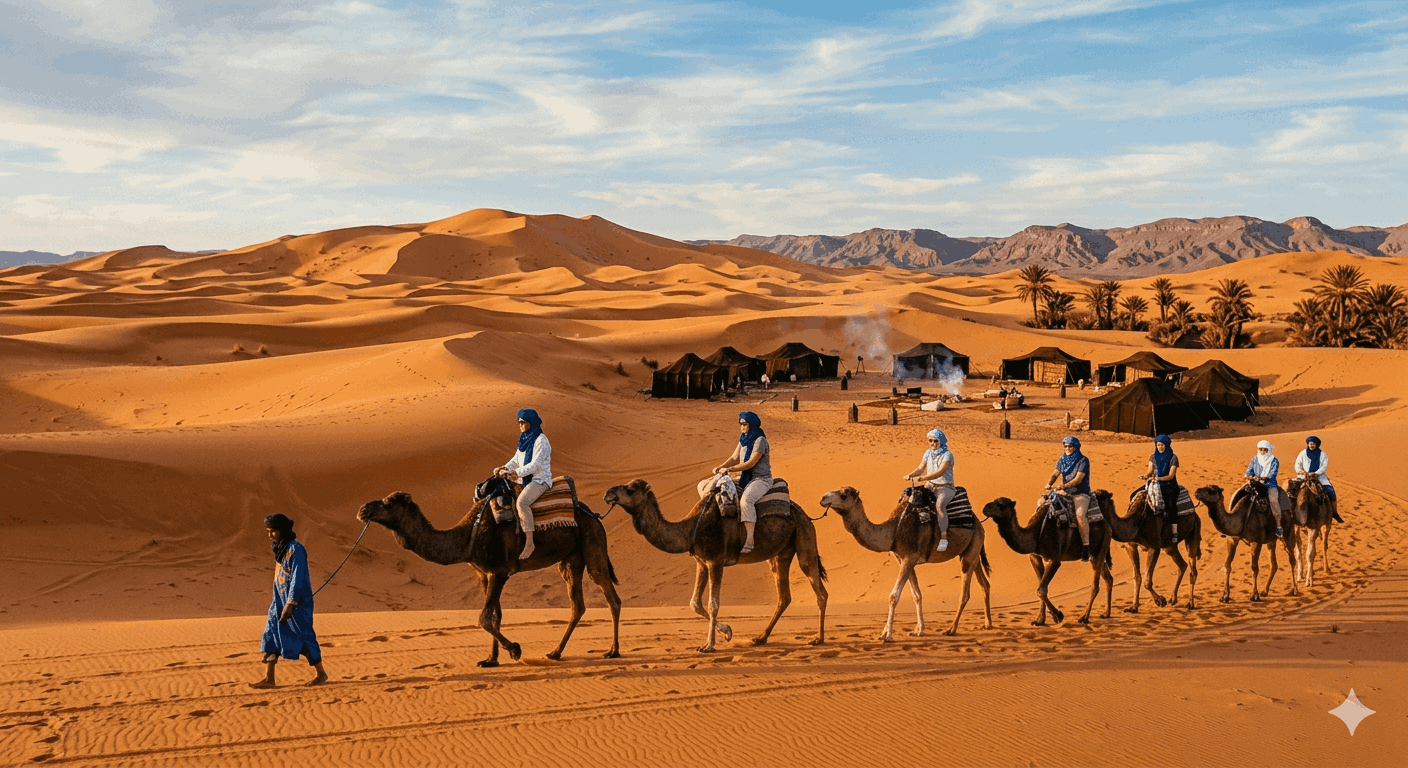
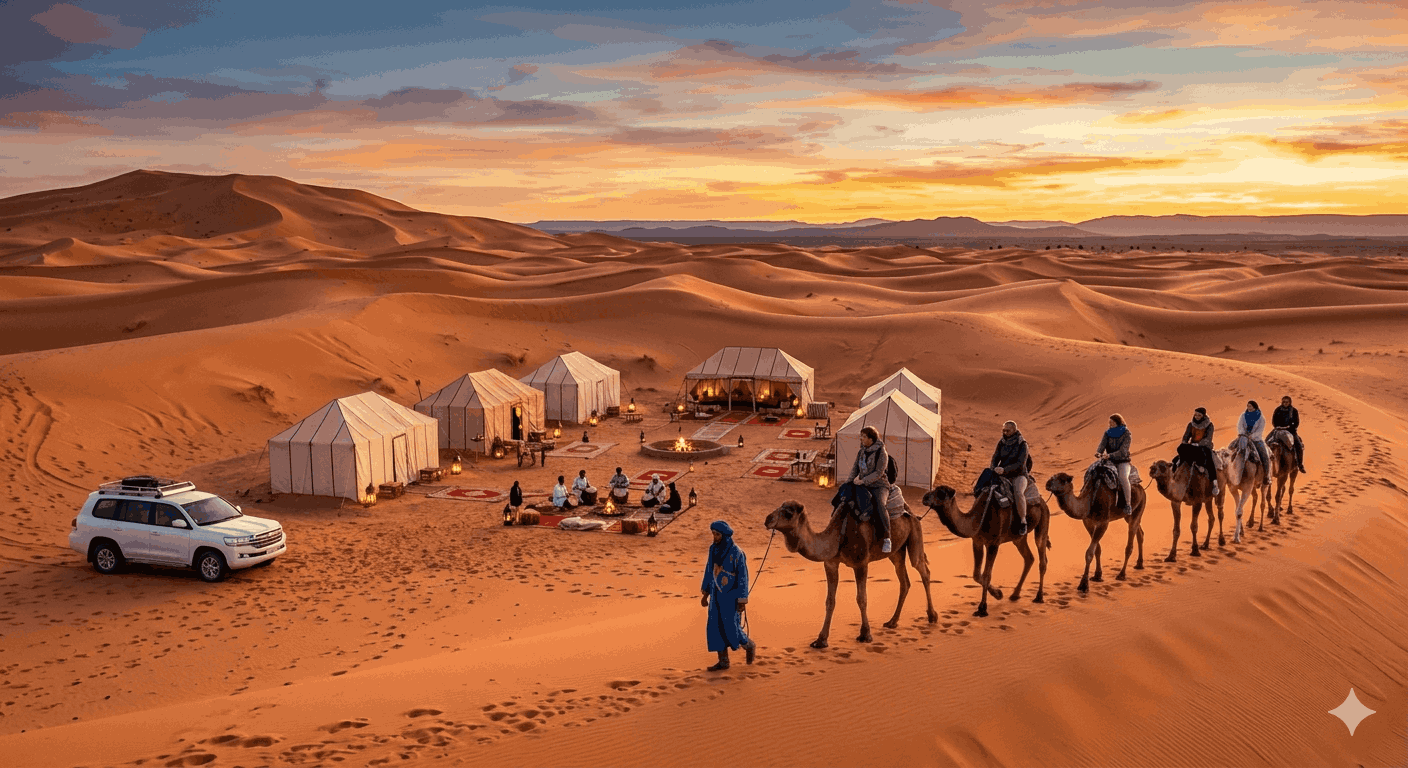
Despite the lack of deep sand, Agafay delivers an authentic desert atmosphere with a variety of adventure activities. Visitors can embark on camel rides across the undulating ridges at sunset, navigate the rocky terrain on quad bikes, or enjoy a traditional dinner under a canvas tent. The region has seen the development of several luxury eco-lodges and desert camps, where guests can spend the afternoon lounging by infinity pools that look out over the arid plains, followed by a multi-course Moroccan feast under a sky brilliant with stars.
A short distance from the Agafay Desert lies Lalla Takerkoust, a massive man-made reservoir that serves as a popular weekend recreational spot for locals and tourists alike. The lake contrast beautifully with the surrounding dry hills, offering opportunities for jet skiing, kayaking, and paddleboarding. Combining a morning of high-adrenaline quad biking in the Agafay hills with a relaxed lunch overlooking the blue waters of Lalla Takerkoust makes for a perfectly balanced day trip that showcases Morocco’s surprising geographical diversity.
Stepping Back in Time at the Kasbah of Ait Benhaddou
Crossing the High Atlas Mountains via the famous Tizi n’Tichka pass is an adventure in itself, as the road climbs to an elevation of over two thousand meters, twisting through dramatic switchbacks and offering panoramic views of deep valleys. This historic route leads directly to the gateway of the Sahara, where the landscape transitions into dry earth and striking rock formations. The ultimate prize at the end of this journey is Ait Benhaddou, a UNESCO World Heritage site and one of the finest surviving examples of earthen clay architecture in the world.
Ait Benhaddou is a fortified village, locally known as a ksar, consisting of numerous individual kasbahs built closely together behind high protective walls. Walking through its narrow, winding alleys feels like stepping onto a movie set, which is fitting given that the site has starred in countless cinematic productions, including Gladiator, Lawrence of Arabia, and Game of Thrones. The buildings are constructed entirely from organic materials, specifically red clay, straw, and wood, featuring beautiful geometric patterns carved into the upper towers to ward off evil spirits and showcase status.
Climbing to the granary at the very top of the hill provides an unforgettable view of the Ounila Valley and the surrounding desert landscape. While the journey from Marrakech takes roughly three and a half to four hours each way, the historical significance and visual grandeur of Ait Benhaddou make it well worth the early morning departure. For those interested in film history, the day trip can easily be extended to include a visit to the nearby city of Ouarzazate, home to Atlas Film Studios, where giant movie sets from past Hollywood productions sit preserved in the desert sun.
Escaping to the Coastal Breeze of Essaouira
If the dry heat of the interior becomes too intense, a day trip to the Atlantic coast offers a refreshing change of climate and scenery. The drive from Marrakech to the coastal town of Essaouira takes approximately three hours, taking you through arid plains where you might spot the famous tree-climbing goats grazing on the leaves of thorny argan trees. Upon arrival, the cool sea breeze, the squawking of seagulls, and the crashing waves present an entirely different side of Moroccan life, far removed from the intensity of the mountain passes or desert plains.
Essaouira, formerly known by its Portuguese name Mogador, features a beautifully preserved medina enclosed by massive eighteenth-century sea walls. Unlike the tight, confusing alleys of Marrakech, Essaouira’s medina is laid out on a grid system with wider streets, making it a much more relaxed environment for shopping and exploring. The town has long been a haven for artists, musicians, and craftsmen, which is reflected in the numerous independent art galleries, wood-carving workshops, and vibrant textile shops that line the white and blue painted avenues.A visit to the bustling fishing port is a must for any traveler spending the day in Essaouira. Watch the fishermen haul in their daily catch from their iconic bright blue wooden boats, then head over to the open-air seafood grills located right next to the harbor entrance. Here, you can select fresh sardines, sea bass, calamari, or lobster straight from the ice displays, which are then grilled on the spot over charcoal and served with simple salads and crusty bread for an authentic and delicious coastal lunch.
Essential Planning Tips for Your Moroccan Excursions
To make the most of your day trips from Marrakech, proper preparation is key to avoiding common travel pitfalls. Transportation is your first major decision, you can choose between renting a car, hiring a private driver, or joining a shared group tour. Private drivers offer the highest level of flexibility, allowing you to stop whenever you want for photographs, bathroom breaks, or to explore a village that catches your eye. If you opt for a shared group tour, ensure you read reviews carefully to understand what is included, as some low-cost tours include mandatory stops at specific carpet shops or cooperative stores where high-pressure sales tactics are common.
Weather in Morocco can change drastically depending on your elevation and proximity to the ocean. While Marrakech might be scorching hot, the High Atlas Mountains can be chilly and windy, requiring layers, a light jacket, and sturdy closed-toe shoes with good grip. Conversely, if you are visiting the coastal areas, the Atlantic breeze can feel downright cold even in the middle of summer, making a windbreaker a necessary addition to your daypack. Always carry plenty of cash in Moroccan Dirhams, as small villages, mountain cafes, and local guides rarely accept credit cards.Finally, remember to respect the local culture as you travel through more rural and conservative areas. The mountain communities are predominantly populated by Amazigh people who maintain distinct traditions, languages, and social norms. Dressing modestly by keeping your shoulders and knees covered is appreciated when visiting rural villages and interacting with the residents. Hiring local guides not only ensures your safety on the trails and inside complex historical sites, but it also directly supports the local economy, providing you with invaluable insights into the daily lives of the people who call these spectacular landscapes home.