There are running shoes, and then there are shoes that become instantly recognizable. On Cloud belongs to the second category. With its distinctive sole, clean Swiss-inspired design, lightweight feel, and unusual cushioning system, On has transformed from a small idea born in the Swiss Alps into one of the most recognizable names in modern running and lifestyle footwear.
What makes On particularly interesting is not simply the appearance of its shoes. The brand was built around a much bigger question: What if running could feel completely different?
That question sits at the heart of the On story. The company did not begin with enormous factories, celebrity campaigns, or decades of experience. It began with an athlete, an unconventional experiment, and a desire to create a new sensation beneath the foot. Over time, that experiment developed into CloudTec®, a technology that became closely associated with the brand and helped give On its famous “running on clouds” identity.
Today, On is much more than a single running-shoe design. It represents a combination of performance, engineering, fashion, movement, and Swiss design philosophy. Its journey from a small Swiss startup to an international sports brand is one of the more fascinating stories in the footwear industry.
The Beginning of On: An Idea Born in the Swiss Alps
The history of On begins in Switzerland with Olivier Bernhard, a former professional athlete who wanted to develop a running shoe capable of producing a sensation he had not experienced in conventional footwear.
Rather than simply making another shoe with more foam or additional cushioning, Bernhard was interested in changing what happened when the foot met the ground.
His early experiments were remarkably simple. He began attaching pieces of garden hose to the outsole of a prototype shoe. It sounds almost too ordinary to become the foundation of a global footwear company, but the unusual shape of those pieces suggested something important: the sole could potentially be designed to react differently during each step.
The concept was based on creating cushioning during landing while still allowing the runner to experience a responsive push-off.
This experimental approach eventually attracted Caspar Coppetti and David Allemann, who joined Bernhard in 2010. Together, the three founders began developing the idea that would become On.
The early story is a reminder that innovation does not always begin in a sophisticated laboratory. Sometimes it begins with someone looking at an ordinary object and wondering whether it could solve an extraordinary problem.
2010: The Year the On Story Took Shape
The year 2010 was a defining point in On’s history.
Bernhard’s experiments were developed further with Coppetti and Allemann, and the founders began turning their unusual outsole concept into a commercially viable running shoe. The idea was simple to explain but difficult to execute: create a shoe that could provide a cushioned landing without making the runner feel disconnected from the ground.
The company describes its original ambition as creating a running experience characterized by cushioned landings and powerful take-offs.
That philosophy became the foundation for what would later be known as CloudTec®, the cushioning technology that became one of On’s defining features.
There was also an early sign that the concept had potential. In March 2010, On’s redesigned prototypes received the ISPO BrandNew Award, giving the young company recognition within the sports industry.
For a young brand competing against companies with decades of experience, this recognition mattered. It suggested that the strange-looking outsole was not simply a gimmick. There was a genuine technological idea underneath it.
What Makes On Cloud Shoes Different?
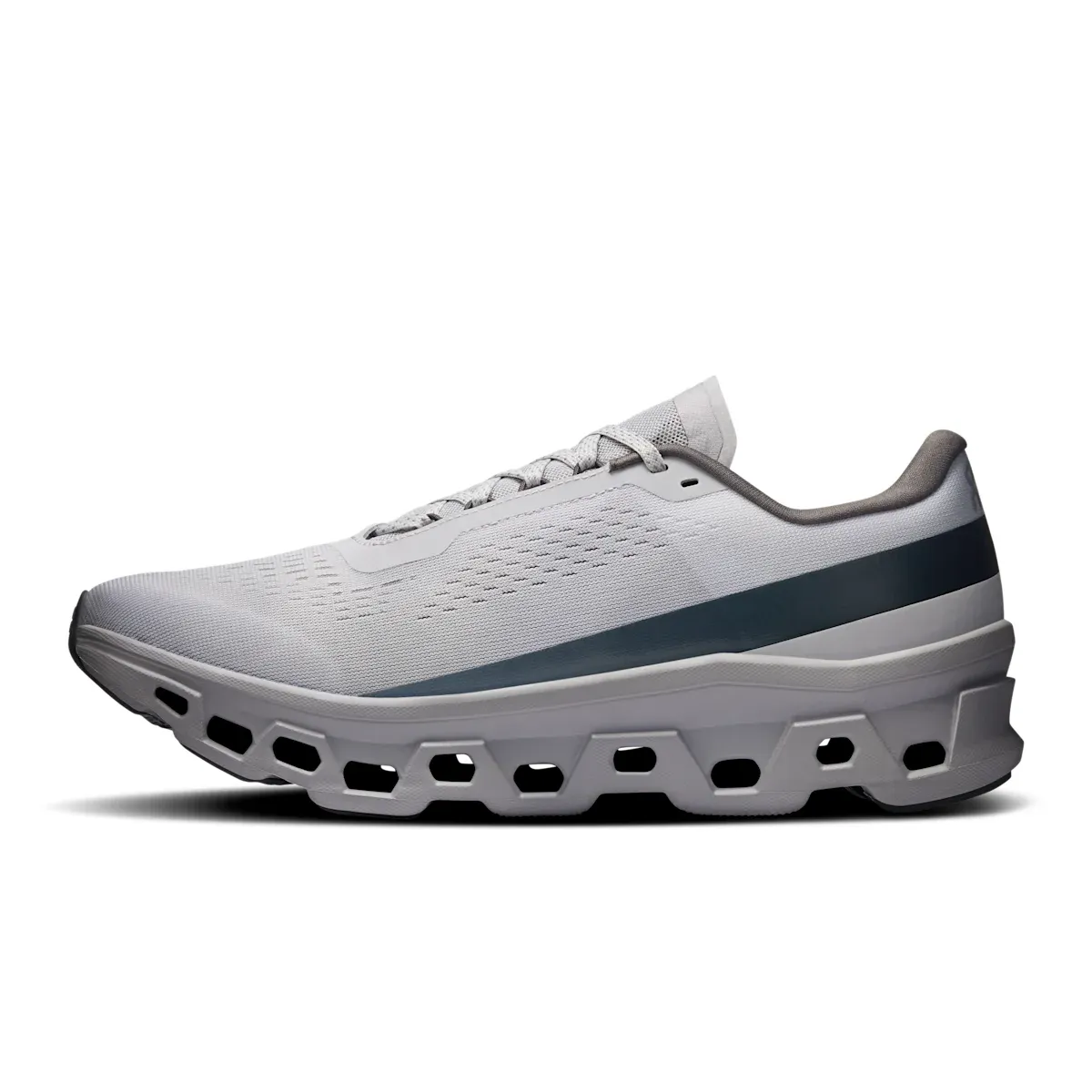
The easiest way to recognize an On shoe is to look underneath it.
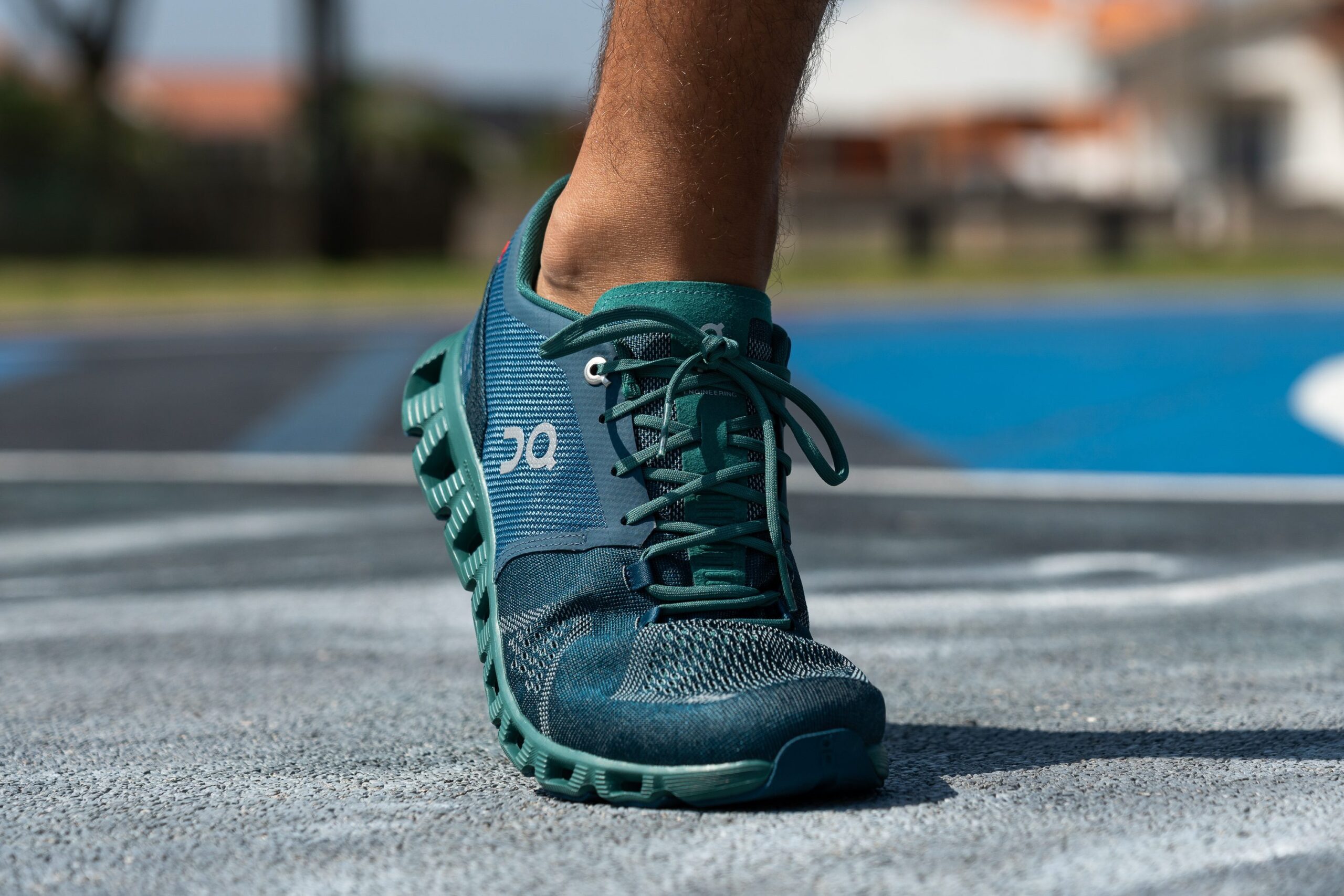
Instead of using a conventional flat-looking rubber outsole, many On running shoes feature a series of hollow sections that visually resemble small pods or tubes. These elements are part of the company’s CloudTec® cushioning system.
The basic idea is that the individual cushioning elements can compress as the foot lands. The geometry is designed to respond to the forces created during movement rather than simply providing one continuous layer of soft material.
This gives On shoes their characteristic appearance.
It also explains the name Cloud.
The company wanted the runner to experience a sensation that could be described as landing on clouds, while still retaining enough responsiveness for the next phase of the stride. The result was a visual identity that became almost impossible to confuse with traditional running shoes.
Of course, no running shoe literally makes a person run on clouds. The phrase is a description of the sensation On was trying to create through its cushioning geometry.
That distinction is important because the company’s appeal has never been based entirely on softness. On’s design philosophy has generally focused on finding a balance between cushioning, responsiveness, stability, and weight.
From Running Experiment to Global Brand
The remarkable part of On’s history is how quickly the brand moved beyond being a niche running experiment.
Many sports companies begin with a strong product but struggle to build a recognizable identity. On managed to combine the two.
Its shoes had a distinctive technological feature, but they also had a distinctive visual language. Clean lines, restrained colors, minimalist branding, and the unusual sole created a look that could work both on the running track and in everyday life.
This helped On move into a space where performance footwear and lifestyle fashion began to overlap.
The shoes were no longer viewed only as equipment for serious runners. They became part of everyday wardrobes.
That transition was important because modern consumers increasingly want products that perform well without looking like specialized equipment. A person can wear running shoes to the gym, while traveling, walking around a city, or simply going about a normal day.
On recognized that opportunity and built a brand around movement rather than limiting itself to competition.
The Swiss Influence Behind On
The word “Swiss” appears frequently in the story of On, and it is more than a geographical detail.
Switzerland has a global reputation for precision engineering, careful design, and attention to detail. On has incorporated that association into its identity by emphasizing Swiss engineering and technology.
The company maintains its On Lab in Zurich, where scientists and technicians work on new product ideas and technologies. According to On, continuous experimentation is central to its approach to innovation.
The On Lab represents an important change from the company’s earliest days.
The original experiment involved garden-hose pieces attached to a prototype. The modern development process involves specialized research, engineering, testing, materials, and athlete feedback.
Yet the underlying philosophy remains surprisingly similar:
Try something different. Test it. Learn from it. Improve it.
That mindset has helped On continue developing new versions of its footwear rather than relying permanently on the success of its first innovation.
Why the Cloud Design Became So Popular
Technology explains part of On’s success, but technology alone rarely creates a cultural phenomenon.
The design played an equally important role.
The sole of an On Cloud shoe is immediately recognizable. Even someone who knows little about running can often identify an On shoe simply by seeing its outsole.
This is powerful branding.
Traditional athletic footwear often places the logo or colors at the center of recognition. On created something different: the construction of the shoe itself became the brand’s signature.
The open sections of the sole also give the shoes a futuristic appearance. They look technical without being excessively aggressive.
That balance helped On appeal to two groups simultaneously.
Serious runners could appreciate the performance-focused engineering, while casual consumers could appreciate the clean appearance and comfort.
This combination is one of the biggest reasons On became more than another running-shoe company.
On Cloud and Everyday Comfort
Although On developed its reputation through running, its appeal has expanded into everyday movement.
People spend long periods standing, walking, commuting, traveling, and working. For many consumers, footwear has become less about dressing for a specific activity and more about finding one pair that can handle several parts of the day.
On Cloud models fit naturally into this trend.
Their lightweight construction, cushioning-focused designs, and recognizable styling make them suitable for people who may never consider themselves serious runners.
This does not mean every On shoe is designed for every purpose. Different models have different characteristics, and runners should still choose footwear based on their individual needs, running style, distance, terrain, and comfort preferences.
But the broader idea is clear: On helped make technical running footwear socially acceptable as everyday footwear.
The Rise of On as a Lifestyle Brand
Perhaps the most interesting chapter in On’s history is the transformation from performance company to lifestyle brand.
A pair of running shoes once communicated that someone was going to run.
Today, sneakers can communicate far more. They can represent personal style, health, travel, comfort, or an interest in technology.
On entered this cultural shift at exactly the right moment.
Its understated appearance gave the shoes versatility. Instead of relying heavily on loud colors or oversized branding, the company developed an aesthetic that felt modern and relatively minimal.
As a result, On footwear began appearing far beyond running tracks.
People wore the shoes while traveling through airports, walking through cities, going to work, exercising, and simply enjoying everyday life.
The company effectively turned the idea of “performance” into part of a broader lifestyle.
Innovation Has Remained at the Center
One reason the On story remains interesting is that the company has not treated its original invention as the end of the journey.
On describes innovation as a continual process of experimentation. Its Zurich-based On Lab is intended to help researchers and technicians develop new technologies and materials.
That philosophy matters in an industry where consumer expectations change rapidly.
A successful running shoe from ten years ago cannot simply remain unchanged forever. Runners want improvements in comfort, weight, energy return, durability, fit, and performance.
At the same time, environmental concerns are becoming increasingly important.
On says its long-term sustainability ambitions include greater use of preferred materials, circular systems, and technologies intended to reduce dependence on fossil-based materials.
This represents another evolution in the brand’s story: the question is no longer only how a shoe performs on the road, but also what happens to the materials and resources used to make it.
On and the Future of Sustainable Footwear
The footwear industry faces a difficult challenge.
Shoes need to be lightweight, durable, comfortable, attractive, and affordable. At the same time, consumers and manufacturers are becoming more aware of the environmental cost associated with materials and production.
On has publicly placed sustainability alongside technological innovation as part of its future direction. The company has discussed fossil-free materials and circular approaches as part of its longer-term vision.
This is an important development because the future of sports footwear will probably not be defined by performance alone.
The most successful brands will increasingly need to answer another question:
Can we create better products while reducing the resources required to make them?
On’s continued investment in research suggests that the company sees this challenge as another engineering problem to solve.
The Human Side of the On Story
It is easy to look at On and see only technology.
CloudTec®.
Swiss engineering.
Modern materials.
Laboratories.
Athletes.
But behind all of those things is a much more human idea: movement changes how people feel.
On’s own philosophy centers on movement and what it calls the “flow state”—the feeling of becoming completely absorbed in an activity.
Running can certainly produce that feeling.
For one person, it might happen during a five-kilometer morning run. For another, it could happen during a marathon. Someone else might experience it during a long walk, a hike, a workout, or a casual afternoon outside.
That broad understanding of movement has allowed On to speak to people who are not necessarily elite athletes.
It makes the brand less about winning and more about experiencing movement.
From Three Friends to Millions of Athletes
The scale of On’s transformation is difficult to ignore.
The company began with three founders pursuing an unconventional idea. Its official history now says that On has reached more than 7 million athletes across more than 50 countries.
That growth illustrates how dramatically the sportswear industry can change when technology, design, storytelling, and timing come together.
But perhaps the most remarkable part is that the original story remains easy to understand.
A former athlete wanted a different running sensation.
He experimented with an unusual material.
Two more people joined him.
The idea became a company.
The company developed a new approach to cushioning.
And the strange-looking sole eventually became one of the most recognizable designs in modern footwear.
What the Future Could Look Like for On Cloud
The future of On will probably involve more than producing another generation of running shoes.
The company has already demonstrated that it can move between performance, lifestyle, technology, and design. The next challenge will be maintaining that identity while becoming a much larger global business.
Growth creates its own problems.
A small company can experiment quickly. A global brand has to deal with larger supply chains, greater consumer expectations, sustainability pressures, competition, and the risk of becoming too predictable.
On’s original advantage was its willingness to challenge conventional thinking.
The important question is whether it can preserve that attitude as the company continues to expand.
If its history is any indication, experimentation will remain important.
The same spirit that turned pieces of garden hose into an unconventional shoe concept could continue to inspire new approaches to materials, cushioning, manufacturing, and sustainability.
Final Thoughts: Why On Cloud Is More Than a Shoe
The story of On Cloud is ultimately a story about questioning assumptions.
For decades, running shoes generally followed familiar formulas. Add cushioning. Improve stability. Reduce weight. Change the upper. Adjust the sole.
On approached the problem differently.
What if the sole itself could change the sensation of landing?
What if cushioning could be designed as a series of interacting elements rather than simply one continuous surface?
What if a performance shoe could also become a recognizable piece of everyday fashion?
Those questions helped produce a brand that looks and feels different.
From Olivier Bernhard’s early experiments in the Swiss Alps to the arrival of Caspar Coppetti and David Allemann in 2010, the development of CloudTec®, the early ISPO recognition, and On’s expansion into a global sports and lifestyle company, the journey has been remarkably fast.
Yet the most memorable part of the story may still be the beginning.
There was no giant laboratory when the idea first appeared. There was no guarantee that runners would understand the unusual design. There was simply an athlete who believed running could feel different.
That belief became an experiment.
The experiment became a shoe.
The shoe became a company.