2026 Resilience: Navigating the UK Farming Fuel Crisis
As of May 2026, the British agricultural sector is facing one of its most challenging energy periods in recent history. A combination of geopolitical instability in the Middle East and a looming shift in government tax policy has transformed UK farming fuel from a standard overhead into a high-stakes strategic asset. For the modern farm, survival in 2026 depends on more than just hard work; it requires a sophisticated approach to fuel procurement and storage.
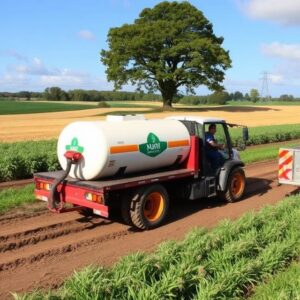
The Strategic Window for Farm Fuel Delivery
Timing is everything in the current market. With a significant conflict disrupting global supply lines through the Strait of Hormuz, crude oil prices have remained stubbornly high, hovering above $110 a barrel. This has directly impacted the cost of every farm fuel delivery, making “spot buying” a risky gamble.
However, a critical legislative deadline is approaching. The UK government’s 5p per litre fuel duty cut, which has provided a vital cushion for years, is set to begin its phased withdrawal on September 1, 2026. Between September and March 2027, duty will rise in three stages, adding roughly 5p plus VAT back onto the price of every litre. Wise farm managers are already planning large-scale deliveries for July and August to fill every available storage tank before these tax increases take hold.
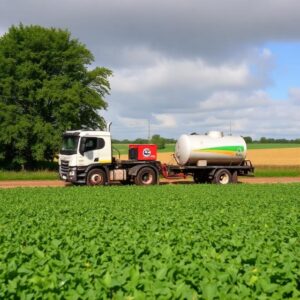
Red Diesel Delivery and Engine Protection
Red diesel (gas oil) remains the primary energy source for field operations, but its cost has seen dramatic fluctuations this spring, peaking near 140p per litre in some regions. While prices have settled slightly to around 114p per litre (excl. VAT) in early May, the financial pressure remains immense.
Because the UK has become more reliant on imported refined fuels following recent refinery closures, the quality of the fuel arriving in a red diesel delivery can vary. Many farmers are now insisting on premium additives that stabilize the fuel for longer storage. This is particularly important for the high-tech, sensitive engines found in 2026-model machinery, where moisture or microbial growth (“diesel bug”) can lead to thousands of pounds in repair costs and devastating downtime.
Industrial Heating Oil vs. Kerosene
The choice between different heating fuels has become a matter of careful calculation.Industrial heating oil (IHO) continues to be the preferred choice for heavy-duty commercial applications, such as grain drying and large-scale livestock climate control. It offers a higher calorific value than standard kerosene, providing more “bang for your buck” in industrial boilers.
However, domestic heating oil (kerosene) remains the staple for the farmhouse. With kerosene prices spiking in March 2026 due to the Middle East conflict, many households are looking at “dual-fuel” strategies. Some industrial oil suppliers are now helping farms install blending valves that allow them to use a mix of fuels depending on which is cheaper at the time of delivery.
Working with Specialized Industrial Oil Suppliers
In a year of “controlled allocations” and supply limits, your relationship with industrial oil suppliers is your strongest defense. The best suppliers in 2026 are not just delivery drivers; they are energy consultants. They provide real-time market data to help you decide whether to “buy now” or “wait,” and they offer flexible credit terms to help manage the cash-flow strain caused by high input costs.
Selecting a supplier with a strong local depot network is essential. In 2026, national supply chains have occasionally buckled under pressure, but local depots often maintain “emergency reserves” specifically for their long-term agricultural clients. This “local-first” approach ensures that your poultry sheds stay warm and your tractors stay moving, even when the national picture is uncertain.
Efficiency in Domestic Fuel Delivery
The farmhouse is the heart of the rural business, and its energy needs are just as urgent as the fields. Most farmhouses are now equipped with smart telemetry sensors that automatically trigger a domestic fuel delivery when the tank hits 20%. This automation removes the risk of “run-outs,” which can be particularly costly if air gets into the fuel lines of an older boiler.
To combat high prices, many rural communities are revitalizing “oil syndicates.” By grouping a dozen farmhouse orders into a single domestic fuel delivery run, residents can negotiate bulk-buy discounts that wouldn’t be available to an individual. In 2026, this community-driven procurement is helping rural families maintain their standard of living despite the broader energy crisis.
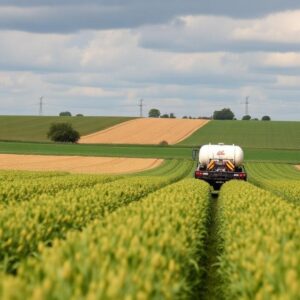
The Role of Dedicated Farm Fuel Suppliers
The most successful farm fuel suppliers in 2026 are those who understand that “food security is national security.” They prioritize the agricultural sector during shortages and provide technical support for the transition to greener fuels.
We are currently seeing a massive surge in the adoption of HVO (Hydrotreated Vegetable Oil). As a “drop-in” replacement for diesel, HVO allows farmers to reduce their carbon emissions by up to 90% without changing their machinery. While HVO carries a price premium, many supply contracts now allow farmers to “hedge” their traditional fuel with a percentage of HVO to meet environmental targets while managing costs.
Securing the Farm’s Future
Managing UK farming fuel in 2026 is about more than just keeping tanks full; it is about protecting the farm against a volatile world. By securing deliveries before the September duty hike, investing in fuel security to prevent theft, and partnering with reliable industrial oil suppliers, British farmers are demonstrating their trademark resilience.
Whether it is a bulk red diesel delivery for the harvest or a routine drop-off of heating oil for the home, every litre must be managed with precision. In this high-cost environment, the difference between a profitable year and a loss often comes down to how well you manage your energy.